
.jpg)
 Wlaf1450
General Assembly passes $58.3 billion budget
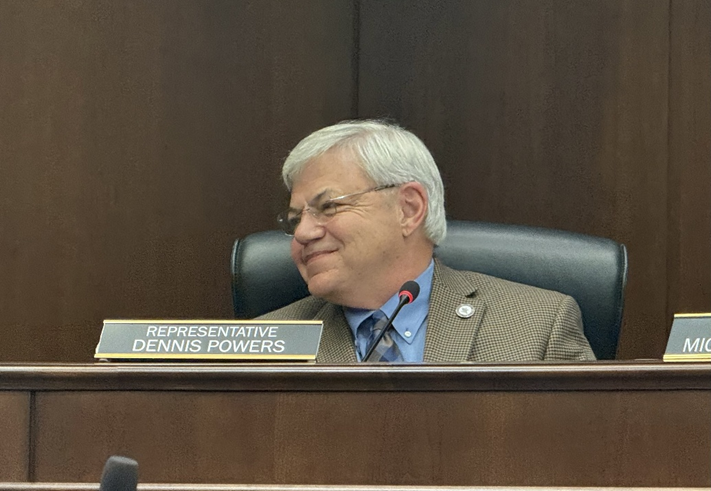
NASHVILLE, TN (SPECIAL TO WLAF)- In release from the Tennessee House Republican Caucus, here is information on that The Tennessee House and Senate on Thursday passed the state’s $58.3 billion budget for the 2026-27 fiscal year, fulfilling the General Assembly’s only constitutional duty.
Lawmakers emphasize fiscal discipline, targeted investments
This year’s spending plan reflects a continued return to more typical economic growth following several years of record-high revenues. The budget reaffirms the General Assembly’s longstanding commitment to fiscal responsibility while making targeted investments to strengthen Tennessee’s economy, improve education, and support families across the state.
“We can be proud that we have held the line on recurring expenditures, preserved Tennessee’s reputation as one of the lowest-taxed states in the nation and continued investing in our core priorities,” said House Finance Chair Gary Hicks, R-Rogersville. “This budget reflects our steadfast commitment to fiscal responsibility and demonstrates why Tennessee remains a strong national model of prudent governance.”
The budget conservatively projects 2.35% growth in state revenue, amounting to about $450 million in recurring funds that have been fully utilized, Hicks told members in the House chamber on Thursday. In recent years, earnings from the Treasurer’s investments have been exceptionally strong, driven by higher balances available for investment and elevated interest rates. The 2026-27 budget incorporates more than $620 million in non-recurring funding from these investment earnings, along with $42 million in unclaimed property revenue.
“Under Republican leadership, Tennessee continues to rank among the most fiscally conservative states in the nation,” said House Speaker Cameron Sexton, R-Crossville. We’ve continued to cut taxes, reduce spending, and pass a balanced budget that has earned Tennessee a AAA bond rating. Proud of Chairman Hicks, Chairman [Ryan] Williams and our finance team for setting the standard nationwide.”
The legislative amendment reallocates $282.4 million from the administration’s original proposal to support $276.4 million in legislative priorities, while preserving a strong bottom line to address potential uncertainties.
Lawmakers also repurposed this funding to advance key initiatives that support hospitals statewide and address critical community needs.
The General Assembly created a $42 million grant pool with nonrecurring funds for important emergency and community services. These grants are in high demand each year, with applications consistently exceeding available funding. Local communities have repeatedly expressed strong support for the program, reinforcing its value in meeting essential needs and strengthening public services statewide.
“Tennessee’s success story continues because we have refused to follow the path of tax-and-spend policies of other states. Instead, we have committed ourselves to limited government, accountability and creating greater opportunities for our citizens,” said House Majority Leader William Lamberth, R-Portland. “I’m proud of the House and Senate’s collaborative work to deliver a balanced budget that meets today’s needs while honoring our obligations to future generations.”
Legislative initiatives and reallocated funds are noted with (***)
Grant pool for community services
- $20 million for volunteer fire departments***
- $5 million for emergency medical services***
- $5 million for volunteer rescue squads***
- $5 million for local museums and capital improvements***
- $5 million for senior centers***
- $1.5 million for local fairs***
- $500,000 for courthouse renovations***
Economic opportunity and fiscal stability
- $20 million to the Rainy-Day Fund, bringing total reserves to more than $2.2 billion
- $8 million to expand the Tennessee Youth Employment Program
- $25 million to the Tennessee Entertainment Commission to support Tennessee’s music and film industries
- $750K for Learning Blade, Career Blade and Ready for Industry programs to improve workforce readiness for STEM/CTE careers***
Infrastructure, housing and rural investment
- $400 million for new and existing transportation projects, bringing TDOTs total General Fund allocations to $5 billion
- $165 million to renovate and replace Tennessee’s rest areas and welcome centers
- $81.2 million to support aviation infrastructure ($25 million***)
- $15 million to the Rural Development Fund for business development and infrastructure
- $20 million to create the Community and Workforce Housing Innovation Pilot Program to support construction of workforce housing
- $20 million for upkeep and infrastructure of shortline railroads***
Education
K-12
- $339 million for public education, including additional TISA funding, summer learning camps and raising starting teacher pay to $50,000 ($125 million for teacher raises)
- $20 million for K-12 facilities maintenance
- $40 million for facilities improvement at public charter schools
- $3 million to expand school-based behavioral health liaison program
Expanding school choice
- $112.9 million to expand school choice to more Tennessee families by expanding available Education Freedom Scholarships, serving a total of 35,000 students
Higher education
- $350 million for a new College of Medicine Interdisciplinary Building at the University of Tennessee Health Science Center in Memphis
- $71.7 million for capital maintenance at higher education institutions
- $10 million for the Governor’s Investment in Vocational Education (GIVE) program to support nuclear workforce education
- $3 million for Next-Gen Academics at Tennessee Tech for nuclear and cyber technologies
- $39.4 million to fully fund the outcomes-based funding formula
- $3.5 million for Corrections Education Investment Initiative to prepare incarcerated individuals for reentry success
- $3.7 million to fund specialty units of higher education***
- $3.2 million to support the Gatton College of Pharmacy at ETSU***
Safe communities
- $44.2 million to bolster the Governor’s Response and Recovery Fund which provides support to individuals, businesses, and communities after natural disasters
- $3.7 million for grants to continue recovery efforts from Hurricane Helene***
- $50 million for public safety grants to enhance crime prevention and increase public safety in Memphis
- $9 million to create the Tennessee Safe Initiative Task Force within TBI***
- $83 million to Tennessee Department of the Military for construction of a new Army Aviation Support Facility in Rutherford County
- $37.5 million for salary increases and creation of an additional 50 State Troopers and related support staff positions to improve public safety across the state
- $932K for digital forensics law enforcement training in East Tennessee***
- $1 million to establish the Volunteer Firefighter Vehicle Grant Program***
- $1.5 million to replace three fire engines lost to Hurricane Helene***
- $20 million for capital improvements at the West Tennessee and East Tennessee Regional Juvenile Justice Centers
- $1.7 million recurring grants to non-profit partners that combat human trafficking and support survivors
- $400K to Thistle Farms for workforce and housing for survivors of human trafficking***
- $1 million to Men of Valor for faith-based reentry support for incarcerated individuals
- $250K to Lipscomb University’s LIFE Program, which provides higher education opportunities for incarcerated individuals
- $500K to Tennessee Prison Outreach Ministry, which provides faith-based reentry support for individuals and their families
Health care
Lawmakers made significant investments in hospitals by providing $137 million from the General Fund to help hospitals, particularly in rural areas, with uncompensated care. By directing General Fund dollars towards this effort, hospitals will have the flexibility to use these resources for critical capital improvements, an option not permitted under the Rural Hospital Transformation Act. This approach not only helps stabilize rural health care providers but also strengthens their ability to expand services and meet long-term community needs.
Additional health care investments include:
- $205 million utilizing Shared Savings to strengthen health care initiatives, including funding Rural Health Transformation Resiliency Grants
- $230 million to TennCare to cover increasing costs associated with medical inflation, including higher prescription drug prices and Medicare payments, and increased utilization and services
- $24.2 million to continue dental pilot program and address shortage of dentists
- $11 million nonrecurring for Live Like Lou Foundation for ALS research ($10 million***)
- $7 million for National Cancer Institute designation at UT Medical Center in Knoxville
- $500K recurring to The Next Door to assist women in recovery from substance abuse
- $500K recurring to The Jason Foundation to combat youth suicide
- $500K recurring to Families Free, for treatment and intervention services to families ($250K***)
Children and families
- $34.5 million to the Tennessee Department of Children’s Services (DCS) to reduce caseload ratios
- $10.7 million to enhance staff safety at DCS facilities that accommodate delinquent youth
- $15 million for capital project and maintenance grants to YMCAs across Tennessee
- $500K to Jonathan’s Path for housing teens in foster care***
- $2 million for summer food program for children***
Conservation and culture
- $81.6 million to create three new Tennessee State Parks
- $1.6 million for the Subsurface Sewage Disposal Program, reducing waiting times for permitting services and oversight
- $1.1 million to support further enhancement of Tennessee’s electric grid
- $10 million for Clark Center Park for future use as new state park***
- $5.5 million for a new Memphis Art Museum***
Nuclear energy and innovation
- $38 million to continue Tennessee’s efforts to lead the nation in adoption of artificial intelligence technology and make government work more efficiently for Tennesseans
- $25 million investment in the Nuclear Energy Fund to attract advanced nuclear technology companies, ensuring Tennessee continues leading the nation as the epicenter of America’s nuclear renaissance
- $20 million to complete the relocation of the North Data Center
- $20 million to accelerate Tennessee’s quantum computing industry by attracting substantial federal and private-sector investment and to translate our scientific strengths into durable, high-wage job creation across advanced manufacturing, life sciences and logistics industries
General Assembly expands education freedom for families
The General Assembly this week passed legislation to increase the number of available Education Freedom Scholarships (EFS) to allow more families to choose the educational path that best fits their child’s needs.
As amended, House Bill 2532, sponsored by House Majority Leader William Lamberth, R-Portland, invests $113 million new dollars for the Tennessee Department of Education (TDOE) to offer up to 35,000 scholarships beginning in the 2026-27 school year.
The scholarships allow eligible students to use state education funds to attend participating nonpublic schools.
“It is always a good day to vote for freedom,” Lamberth told members on the House floor. “That’s why these are called Education Freedom Scholarships, because they provide freedom that doesn’t currently exist for families in Tennessee to chart their child’s educational journey the way that they know best.”
House Bill 2532 updates how scholarships are distributed to better serve students across Tennessee, helping ensure children from low-income households can attend the school of their choice. Students who received scholarships the prior year will be prioritized, followed by students from homes making below 100% of the amount required to qualify for free or reduced-priced lunch. It then considers students up to 300% of that threshold, students exceeding 300% currently in public school or enrolling in kindergarten, and finally, students exceeding 300%.
The General Assembly established the scholarship program last year, administering 20,000 scholarships in the 2025-26 academic year. The law included a hold-harmless provision, ensuring funding to public school districts would not decrease due to disenrollment for any reason.
House Bill 2532 retains this provision for the 2026 and 2027 school years. Beginning in 2028, the provision would protect public school funding if a student disenrolls as a result of an EFS. To preserve their funding baseline, schools must collect Social Security numbers of students at the time of enrollment.
The proposal also adds several transparency requirements, directing the TDOE to annually report to the education committees in the House and Senate the number of applications from each county, the number of eligible students who were enrolled in a public school at the time of application, and the number of students applying for a scholarship for kindergarten enrollment. Additionally, the department would be required to report household income data, if available, without personally identifiable information.
Demand for the program has continued to grow, with applications exceeding 56,000 for the next school year, including 18,644 renewal applications and 37,798 new applications.
The EFS amount is tied to the state’s base per-pupil funding under the Tennessee Investment in Student Achievement (TISA) formula, projected to be about $7,530 per student for the 2026-27 school year.
Tennessee Republicans have invested $4.4 billion new dollars in public education over the last decade and provided $1.08 billion for teacher pay raises during the same time. By 2027, starting pay for public school teachers in Tennessee will be $50,000.
House Bill 2532 now heads to Gov. Bill Lee’s desk to be signed into law.
Republicans clear path for greater health care access
The General Assembly this week gave final approval to two measures that aim to expand competition in Tennessee’s health care system. The bills roll back regulatory barriers and strengthen oversight of hospital consolidation.
As amended, House Bill 819, sponsored by State Rep. Johnny Garrett, R-Goodlettsville, would eliminate the state’s Certificate of Need (CON) requirements for acute care hospitals, satellite emergency departments and cardiac catheterization labs, transitioning instead to a licensure-based system through the Tennessee Health Facilities Commission.
“Patients in Tennessee deserve timely access to high-quality care, whether it’s emergency services close to home or advanced cardiac procedures,” said Garrett. “This legislation removes burdensome red tape that has limited competition and innovation in our health care system while maintaining strong safety standards through hospital oversight. This is a smart, balanced step forward for patients, providers, and communities.”
A CON is a state regulatory process that requires health care providers to obtain approval before building new facilities, expanding services or making certain major capital investments. It was created to control health care costs and prevent unnecessary duplication of services but has limited competition and slowed access to care by today’s standards.
The measure builds on recent efforts by the General Assembly to scale back CON requirements, including for ambulatory surgery centers. Existing cardiac catheterization facilities will be grandfathered.
“Free market principles have proven effective across every sector of our economy. Health care should be no different. Increasing competition in Tennessee’s health care market will drive down costs, improve quality and deliver better outcomes for our patients,” Garrett said.
CON requirements for most acute care hospitals would be phased out beginning July 1, 2030. In Northeast Tennessee, acute care hospitals operating under a Certificate of Public Advantage (COPA) agreement would exit the CON process by July 1, 2028, to align with the COPA termination. Satellite emergency departments and cardiac catheterization labs would also be phased out of CON by July 1, 2028 and would be required to operate as licensed outpatient departments of a hospital.
COPA Termination
In addition to CON reform, House Bill 2278, sponsored by Republican Caucus Chairman Jeremy Faison, R-Cosby, addresses Tennessee’s existing COPA agreement, the state’s primary mechanism for overseeing hospital mergers that reduce competition.
The legislation will terminate the COPA on June 30, 2028, maintain pricing restrictions for five years, and then transition antitrust oversight to the Tennessee Attorney General. Any modifications to the pricing require mutual agreement between the state and the hospital system, with the hospital entity required to cover the cost of the ongoing oversight.
Tennessee’s only active COPA was issued in 2018 to allow the merger of Mountain State Health Alliance and Wellmont Health Systems into Ballad Health.
Together, the changes represent a broader effort by lawmakers to modernize Tennessee’s health care regulatory framework by promoting competition to ensure patient affordability and access. Both measures received final approval from the General Assembly on Thursday and now head to the governor’s desk for his signature.
Regulatory Freedom Act boosts government transparency
The General Assembly this week passed legislation to improve government efficiency and expand opportunities for public input in Tennessee.
The Regulatory Freedom Act of 2026, or House Bill 1913, sponsored by House Majority Whip Clark Boyd, R-Lebanon, requires state agencies to receive approval by a majority vote of the General Assembly for proposed rule changes that would generate a fiscal impact of more than $1 million over five years on a private sector industry, or over one year for an emergency rule.
“House Bill 1913, otherwise known as the Regulatory Freedom Act, will for the first time in the state’s history take into consideration the fiscal impact that the private sector bears when state agencies promulgate rules or regulations that cost money,” Boyd said on the House floor.
The proposal will require government agencies to post proposed rules online for at least 45 days before a public comment period to provide greater transparency to Tennesseans. It will also direct state agencies to make a good-faith effort to notify trade associations or organizations if a rule change would impact them.
State agencies are currently required to produce fiscal impact statements for proposed rule changes. House Bill 1913 would require fiscal statements to be generated after a period of public comment to increase accountability. The legislation requires agencies to compile annual reports on any fiscal impacts generated by new rules that took effect in the preceding year. Each document would be prominently published on the Tennessee Secretary of State’s website.
House Bill 1913 now heads to Gov. Bill Lee’s desk to be signed into law. It will take effect Jan. 1, 2027.
Bill strengthens accountability for Shelby County judicial system
Lawmakers this week voted to increase oversight, transparency and accountability within Shelby County’s judicial system. House Bill 483, sponsored by State Rep. Andrew Farmer, R-Sevierville, establishes new mechanisms to review prosecutorial practices in the state’s 30th Judicial District.
The legislation authorizes the Tennessee Attorney General to conduct an audit of a district attorney general’s disposition of charges and related judicial outcomes, including plea agreements, convictions, sentences, charges dismissed and decisions not to prosecute. The audit may also review recommendations related to bail and pretrial release, as well as the misuse of public funds.
“I see this as a public safety bill. I see this as a victim’s rights bill,” said Farmer. “This is going to … give us a mechanism to keep up with those cases, and the cases that are prosecuted there, and the results of those cases.”
In addition, the bill allows the Attorney General to petition the Tennessee Supreme Court to appoint a district attorney general pro tempore in cases where criminal offenses may not be prosecuted. This provision is intended to ensure serious crimes have been properly addressed and to provide an additional layer of accountability in the justice system.
The legislation aligns with the Memphis Safe Task Force Accountability Act, which was approved by the General Assembly last week to address violent crime in Shelby County.
House Bill 483 will be taken up one final time next week to resolve differences between the House and Senate versions.
Process for voluntary surrender of parental rights passes
The House of Representatives this week approved legislation to streamline certain adoption processes and prioritize the best interests of children in Tennessee. House Bill 1263, sponsored by State Rep. William Slater, R-Gallatin, creates a process for the voluntary surrender of parental rights for parents who do not want to appear before a judge. The proposal preserves judicial oversight by establishing specific guardrails and safety requirements.
“We already have guardrails in place. What we’ve done is gone back to clarify to make sure that those guardrails are clearly stated in the law,” Slater told the Judiciary Committee earlier this month.
Voluntary surrender would only apply when a child is six months of age or less, not in the custody of the Tennessee Department of Children’s Services, and the surrendering party is over 18 years old and represented by an attorney. According to the legislation, birth parents could file a non-binding notice of surrender within 30 days of surrender, which must be signed by the parent, the attorney representing the birth parent, the accepting party, and an attorney representing the accepting party.
There would then be a hearing for the court to review the notice, a home study report and information forms from the surrendering and accepting parties. The court may then approve the notice and a provisional order of guardianship, effective upon filing the notice of surrender. After this, a birth parent can execute an out-of-court surrender form.
This proposal does not affect a father’s waiver of parental rights, and it does not apply if the surrendering parent has an intellectual or developmental disability. The Senate companion version of House Bill 1263 is scheduled for a final vote on April 20. It will take effect immediately upon Gov. Bill Lee’s signature for the purpose of developing forms, and for all other purposes, it will take effect Jan. 1.
Republicans push for drug screenings of mass shooting suspects
Lawmakers this week approved a bill to study potential links between psychotropic medications and mass shootings. House Bill 2013, sponsored by State Rep. Mary Littleton, R-Dickson, authorizes law enforcement officers to request consent from a mass shooting suspect, or a parent or guardian if they are a minor, for a blood or urine drug screening if the officer has probable cause. If consent is not given, law enforcement may still pursue a search warrant for the test.
“[The bill] requires the hospital where the blood or urine sample was procured and tested to send the results of the drug test to the University of Tennessee Health Science Center to study the drug interactions between the psychotropic drugs and other drugs that were present in the person’s blood or urine,” Littleton said.
In 2025, the General Assembly passed a law requiring medical examiners and forensic centers to test deceased mass shooters for the presence of psychotropic drugs and gender-altering medications. The law followed lengthy discussions about whether these drugs may have been linked to the tragic 2023 shooting at Covenant School in Nashville. House Bill 2013 would allow for the screening of any drugs, including psychotropic medications, that may have been present in the suspect’s system at the time of the shooting. Data sent to the University of Tennessee Health Science Center would be anonymized and contain no identifying information.
To collect better data on deceased shooters, the proposal also expands the definition of mass shooting from resulting in four or more deaths to incidents where four or more people are injured, or there is an apparent attempt to do so.
The bill now heads to Gov. Bill Lee’s desk for his signature. If enacted, it would take effect July 1.
TN moves to accelerate underground transit
The Tennessee General Assembly on Monday passed legislation to support the development of underground transportation infrastructure across the state, creating a more efficient and coordinated process for major transit projects. House Bill 2450, sponsored by State Rep. Johnny Garrett, R-Goodlettsville, enacts the Subterranean Transportation Infrastructure Coordination Act, establishing a new framework to help plan, review, and deliver large-scale tunnel transit systems.
The legislation creates the Subterranean Transportation Infrastructure Coordination Authority, a state entity responsible for resolving disputes, coordinating permitting and overseeing key aspects of underground transit development. The authority will be charged with reviewing projects like the Music City Loop, a zero-emissions high-speed transit system connecting downtown Nashville to the Nashville International Airport at no cost to taxpayers.
“This legislation ensures Tennessee is prepared to lead in next-generation transportation,” Garrett said. “By improving coordination, we are creating a clear, efficient pathway for innovative infrastructure projects that connect people more quickly and expand economic opportunity, benefiting Tennesseans for generations to come.”
The bill establishes the Governor’s Infrastructure Coordination Council, which brings together leaders from multiple state departments to streamline project approvals. The council will coordinate timelines, reduce regulatory delays, and improve communication across agencies involved in transit development.
The bill also establishes a Transit Project Fund, which will be supported by fees, grants, and other non-state revenue sources. The fund is expected to offset administrative costs associated with the new authority. House Bill 2450 now heads to Gov. Bill Lee’s desk for his signature.
Proposal creates IVF certification process
The House this week passed House Bill 2290, sponsored by State Rep. Ryan Williams, R-Cookeville, to require fertility clinics operating in the Volunteer State to obtain a certificate from the Tennessee Department of Health (DOH) to perform assisted reproductive technology (ART), which includes medical procedures to address infertility.
“Currently, there is no licensure in the state of Tennessee for IVF and as many members know, there was an IVF clinic that closed a few years ago and just abandoned the embryos there,” Williams said. “If the Department of Health had a licensure, we could have intervened sooner.”
The proposal directs clinics to follow current clinical practice guidelines and professional standards for genetic testing, as determined by a nationally recognized organization in reproductive medicine or obstetrics and gynecology, such as the Society for Assisted Reproductive Technology. They must also provide an emergency plan for embryo transfer if a clinic were to permanently close, and would be required to pass the most recent laboratory inspection from the College of American Pathologists or the Joint Commission on Accreditation of Healthcare Organizations.
To operate in Tennessee, clinical directors must be licensed to practice medicine or osteopathic medicine, be board certified in obstetrics and gynecology, have completed an accredited fellowship in reproductive endocrinology and infertility, demonstrate substantial clinical experience in ART procedures, and maintain continuing medical education in the technology.
House Bill 2290 will now head back to the Senate for final consideration.
Lawmakers establish framework for stem cell therapy
Lawmakers this week unanimously passed legislation to create ethical and medical guardrails for stem cell therapy in the Volunteer State. House Bill 2246 allows physicians to provide stem cell or regenerative medicine therapies that are not approved by the U.S. Food and Drug Administration (FDA) if treatments are within their scope of practice. All cells, tissues or cellular- or tissue-based products must be obtained from a facility registered with the FDA or an accredited third-party, and cannot be derived from an aborted unborn child.
“By establishing a clear framework, Tennessee can uphold high standards, protect public health and expand availability to safe and effective therapies,” Hurt said.
Stem cell therapy uses living stem cells to repair, replace or regenerate tissues in the body to address a growing number of diseases, injuries and disorders. It can be used to treat people with leukemia, Hodgkin disease, non-Hodgkin lymphoma and other cancers, among other diseases, according to the Mayo Clinic. Hurt’s proposal requires advertisements for non-FDA-approved stem cell therapies or regenerative medicine treatments to include a notice divulging that information and encouraging consultation with a person’s primary care provider. Written consent signed by a patient or a patient’s representative must be obtained before treatment.
Any adverse events from stem cell therapy must be reported to a physician’s licensing authority. Physicians must also report adverse events from allogeneic stem cell therapy, which utilizes donor stem cells, to the manufacturer and the accrediting organization within 30 days. House Bill 2246 encourages physicians to participate in clinical outcomes registries, which collect data on specific diseases, devices and procedures. Registries help ensure ongoing safety monitoring and promote evidence-based practice development and quality improvement.
The proposal now heads to Gov. Bill Lee’s desk. It will take effect immediately for promulgating rules, and on July 1 for all other purposes.
GOP strengthens enforcement against abortion pill providers
The General Assembly on Thursday approved legislation clarifying enforcement mechanisms and increasing the penalties for providers who illegally prescribe abortion-inducing drugs to women in Tennessee. In 2022, lawmakers approved the Tennessee Abortion Inducing Risk Protocol Act, restricting access to abortion pills and banning mail-order abortions. House Bill 2380, sponsored by Health Committee Chair Bryan Terry, R-Murfreesboro, clarifies how the state may pursue civil action against individuals who knowingly violate state law related to abortion-inducing drugs.
“Current law states [that] the attorney general and reporter may bring action to enforce compliance with this part, and this bill simply provides the attorney general with a clear mechanism to enforce those existing protections,” Terry said.
In March, House Republicans passed legislation to create a civil cause of action against out-of-state abortion pill suppliers who unlawfully send abortion drugs into Tennessee, resulting in the death of an unborn child. Under the proposal, a parent or family member who can prove by a preponderance of the evidence that a drug caused death would be entitled to $1 million in statutory damages from the supplier.
House Bill 2380 creates a $10,000 civil penalty for each violation and a $1 million penalty when the violation results in serious bodily injury or death. Each instance in which an abortion-inducing drug is unlawfully provided counts as a separate violation.
The bill now heads to Gov. Bill Lee’s desk for his signature. If enacted, it would take effect July 1.
Proposal honors Charlie Kirk, protects campus free speech
The General Assembly this week passed legislation by State Rep. Gino Bulso, R-Brentwood, to ensure college campuses remain beacons of free expression. The Charlie Kirk Act, or House Bill 1476, requires public higher education institutions in Tennessee to adopt a policy on freedom of expression consistent with that implemented by the University of Chicago in 2015, which underscores a university’s responsibility to promote “fearless freedom of debate and deliberation.” They will also adopt a policy on political and social action, like the Kalven Report, which encourages institutional neutrality.
“The Charlie Kirk Act creates critical safeguards for students and faculty and renews the idea that our higher education institutions should be centers of intellectual debate,” said Bulso.
Public colleges and universities will be prohibited from disinviting a speaker based on viewpoints or in response to threatened protests or opposition from students or faculty. Additionally, they cannot prohibit or restrict a student organization or faculty member from inviting a speaker.
The Charlie Kirk Act protects academic freedom by prohibiting retaliation or discrimination against faculty based on viewpoints expressed in scholarly work or any speech or writing protected by the First Amendment to the U.S. Constitution. It also safeguards the freedom of religion and conscience of students and faculty and prohibits denying the recognition of a student group based on religious beliefs or positions on abortion, homosexuality, or transgenderism.
The proposal honors the legacy of Charlie Kirk, a political activist who dedicated his life to open dialogue and civil debate. Kirk was assassinated on Sept. 10, 2025, at Utah Valley University during a Turning Point USA event, an organization he founded. House Bill 1476 now heads to Gov. Bill Lee’s desk to be signed into law. It will immediately take effect for the purpose of adopting policies, and for all other purposes, it will take effect on July 1.
Republicans protect sensitive safety-related records
The General Assembly this week approved a proposal safeguarding records from the Tennessee Department of Safety and Homeland Security (TDOSHS) to protect critical infrastructure and prevent the release of sensitive security and threat information. House Bill 1640, sponsored by State Rep. Rick Eldridge, R-Morristown, would classify certain Office of Homeland Security records as confidential if their release could pose a risk to public safety or security.
These protections would apply to critical infrastructure information, including building layouts, camera locations, cybersecurity defenses and emergency response plans. It also protects records of threats or attacks.
“[This bill protects] threat information relating to terrorism and foreign adversary activity in the state [and] intelligence sharing of sensitive capabilities received from federal, state, local, and private sector partners,” Eldridge told House members ahead of the vote.
Information related to threats against public officials and law enforcement would also be kept confidential. Basic crime and arrest information would remain available, including records regarding police misconduct or excessive force investigations, court records, government spending disclosures and videos of alleged crimes. Sensitive details could be redacted, according to the legislation.
The TDOSHS will be required to submit an annual report to the legislature on the number of threats against public officials and how many led to charges or prosecution. The bill now heads to Gov. Bill Lee’s desk for his signature.
Lawmakers approve plan to tackle student truancy
The General Assembly this week approved legislation to strengthen student attendance tracking and close gaps in truancy enforcement in public and charter schools across the Volunteer State. House Bill 1823, sponsored by State Rep. Kevin Raper, R-Cleveland, requires a student’s attendance record to follow them when transferring between public school districts during the academic year. Current Tennessee law allows students to transfer between public schools and later re-enroll without unexcused absences carrying over, making truancy enforcement difficult.
“After the slate is cleared, [students] will come and transfer back to us and, once again, they start over again in truancy,” Raper explained on the House floor.
The bill applies to students in Tier 3 truancy intervention, the most advanced stage, where repeated unexcused absences trigger formal oversight and potential involvement with juvenile courts. It also strengthens coordination with the juvenile justice system by requiring school directors to notify juvenile courts when a student undergoing truancy intervention withdraws but does not enroll in another public school. This will assist schools in evaluating habitual truancy, implementing chronic absenteeism interventions and identifying cases of educational neglect.
Attendance records would not be transferred into a new academic school year, and the bill does not apply to homeschool or private school transfers.
The Tennessee Department of Education identifies chronic absenteeism as a key inhibitor of student success, with students missing 10% or more of the school year at significantly higher risk of academic decline and dropout.
House Bill 1823 now heads to the governor’s desk for his signature.
General Assembly strengthens parental rights in health care
Lawmakers this week approved legislation clarifying parental access to their children’s medical records, aligning state law with the Families’ Rights and Responsibilities Act.
House Bill 853, sponsored by State Rep. Michele Reneau, R-Signal Mountain, ensures parents, legal guardians and custodians have the right to access the medical records of their minor children, including prescription and rehabilitation records, even in cases where treatment was provided without parental consent under existing law.
House Bill 853 establishes clear statutory definitions for prescription and rehabilitation records, providing greater transparency and uniformity in how medical information is categorized and accessed. Access to records may be restricted if a health care provider is required to report suspected abuse and determines that releasing the records could reasonably endanger the life or physical safety of a child.
Health care providers are required to notify a parent or guardian if a minor expresses suicidal ideation and is at risk of attempting suicide, ensuring families are informed during critical moments. The legislation does not apply to emancipated children, change existing law regarding when minors may consent to medical treatment, or give parents decision-making authority over treatment decisions.
House Bill 853 now heads to Gov. Bill Lee’s desk to be signed into law.
Bill modernizes athletic trainers’ capabilities
The General Assembly unanimously approved legislation this week to expand the scope of care provided by athletic trainers in Tennessee.
House Bill 658, sponsored by State Rep. Tim Hicks, R-Gray, authorizes trainers with doctors’ orders to check blood sugar, utilize medically appropriate temperature measurements in emergencies like heat strokes, and close small cuts with medical glue.
“This bill ensures that when a medical emergency happens on a field, the licensed athletic trainer will be onsite and act immediately,” Hicks said on the House floor before the vote. “This [bill] is about faster response, stronger guardrails and protecting student-athletes.”
They would also be able to administer certain medications, including epinephrine, naloxone, glucagon and flu vaccines for students nine years and older, with physician approval. Properly trained individuals under physician supervision could administer IV fluids and dextrose for diabetic emergencies.
The bill clarifies that athletic trainers cannot act independently as doctors and must work under a licensed physician’s direction. Additionally, House Bill 658 requires athletic trainers to be licensed and certified through the Board of Certification for the Athletic Trainer.
The bill now heads to Gov. Bill Lee’s desk for his signature. If enacted, it will take effect on July 1.
Briefly…
AI protections for children: The House on Thursday passed legislation to ensure major artificial intelligence (AI) chatbots protect children in Tennessee. The Artificial Intelligence Public Safety and Child Protection Transparency Act, or House Bill 1898, sponsored by Deputy Speaker Jason Zachary, R-Knoxville, would require certain AI companies to develop, implement and publish plans for managing catastrophic risk and risks to children. Plans would be continually updated and modified to safeguard Tennessee consumers. The proposal also requires developers to report to the Tennessee Attorney General within 15 days of a critical safety incident, or within 24 hours if it poses an imminent risk of death or serious physical injury. The companion version of House Bill 1898 is still advancing through the Senate.
Local emergency response readiness: The House of Representatives voted unanimously in favor of legislation to strengthen emergency preparedness and coordination among local governments. House Bill 1753, sponsored by State Rep. Dan Howell, R-Cleveland, requires all local emergency management agency employees to participate in training administered by the Tennessee Emergency Management Agency on mutual aid agreements and the Emergency and Disaster Assistance Agreement Act of 2004.Despite Tennessee law currently allowing cities and counties to provide mutual aid during declared emergencies through established agreements, response efforts following Hurricane Helene revealed that many local officials were unaware of these existing provisions. The companion version of House Bill 1753 is expected to be considered by the Senate next week.
Preventing lawsuits funded with public school dollars: The General Assembly this week passed House Bill 664, sponsored by Education Committee Chair Mark White, R-Memphis, to prohibit local education agencies and charter schools from using public funds to file or maintain lawsuits against the state to challenge accountability measures imposed by the General Assembly. This proposal ensures differences are resolved locally, through existing appeals and administrative processes. House Bill 664 will take effect immediately upon Gov. Bill Lee’s signature.
Aligning local elections with state elections: The House on Monday passed House Joint Resolution 729 to align local elections with state election cycles. Sponsored by House Majority Leader William Lamberth, R-Portland, the proposed constitutional amendment changes the general election date from the first Thursday in August to the first Tuesday after the first Monday in November. It would not affect property assessors. Many counties currently hold their county primary elections in May and their general election in August. The constitutional amendment would shift those elections to align with the state schedule, moving the primary to August and the general election to November. The Tennessee State Constitution requires that a proposed amendment must first pass by a majority vote in two consecutive General Assemblies before it can be placed on the ballot. It is then submitted to voters during a gubernatorial election year and must be approved to take effect. If approved this year, the amendment must be passed again by the next General Assembly before it can appear on the 2034 gubernatorial ballot for voter consideration.
911 usage fees: Lawmakers this week approved a resolution to support emergency communications and enhance public safety. Senate Joint Resolution 48, sponsored by State Rep. Michele Carringer, R-Knoxville, increases the monthly 911 surcharge on Tennesseans’ phone bills from $1.50 to $1.86. The fee is used to support 911 centers and necessary administrative and operational expenses. The Tennessee Emergency Communications Board already approved the rate change, but the General Assembly must sign off before it can be implemented. The $1.50 rate has been in place since 2021. Tennesseans can expect the rate change on phone bills on or after Sept. 1.
Remembering Pearl Harbor: Lawmakers this week passed legislation by State Rep. Michael Lankford, R-Palmyra, to formally recognize Pearl Harbor Remembrance Day in Tennessee. House Bill 1463 honors the men and women who lost their lives in the historic attack by requiring any flag flown over the State Capitol to be lowered to half-staff each year on Dec. 7, from sunrise to sunset. House Bill 1463 now heads to Gov. Bill Lee’s desk for his signature.
Low-performing virtual schools: The General Assembly this week approved legislation to expand options for Tennessee families while ensuring all students receive a quality education. House Bill 2420, sponsored by Education Committee Chair Mark White, R-Memphis, and Education Instruction Subcommittee Chair Scott Cepicky, R-Culleoka, requires the commissioner of the Tennessee Department of Education (TDOE) to close a public virtual school if it is a priority school and performs significantly below expectations for three consecutive years. The TDOE would notify parents within a week of meeting the criteria for closure and provide other enrollment options within 30 days. Additionally, parents must be notified if the virtual school performs significantly below expectations for two consecutive years, based on the Tennessee Value-Added Assessment System, or if it ranks in the bottom 10% of overall achievement, and that the school’s path could lead to closure. House Bill 2420 now heads to Gov. Bill Lee’s desk to be signed into law. It will take effect July 1.
Epinephrine in schools: The House of Representatives approved legislation to ensure schools are better prepared to respond quickly to life-threatening allergic reactions. House Bill 1550, sponsored by State Rep. Elaine Davis, R-Knoxville, broadens the type of epinephrine that public and private schools can carry. Current state law allows only auto-injectors like EpiPens. This proposal would expand options to include other forms like nasal sprays and dissolvable pills. Doctors could prescribe the medication to the school rather than a specific student, enabling a school nurse or trained staff member to treat a student who may not have their EpiPen or who is having their first allergic reaction. The proposal also encourages schools to keep the medication in various locations around the school, including the front office and cafeteria, to make it more accessible in an emergency. The companion version of House Bill 1550 is expected to be heard in the Senate next week. If enacted, the bill would take effect on July 1.
Judicial protections: The General Assembly voted unanimously on Tuesday to pass legislation strengthening privacy protections for judicial officers. House Bill 1659, sponsored by State Rep. Jerome Moon, R-Maryville, provides safeguards for judges, chancellors, attorneys, district attorneys and public defenders by allowing their private home addresses to remain confidential and exempt from public inspection. Addresses may be released only when required by law or upon request from a candidate through a certified form provided by the coordinator of elections, which must include a reason under penalty of perjury. House Bill 1659 will take effect upon the governor’s signature.
Protections for pregnant women: A proposal to build on Republicans’ pro-family agenda cleared the General Assembly this week. House Bill 1457, sponsored by State Rep. Gino Bulso, R-Brentwood, adds pregnant women who have high-risk pregnancies to the list of individuals who qualify for a temporary disabled parking permit. The high-risk determination must be certified by the woman’s physician. Temporary and permanent disabled parking placards are currently available to Tennesseans with a variety of disabling conditions, including wheelchair use, difficulty walking, or 20/200 vision or worse with corrective lenses. They can also be issued to people using braces or crutches, those with pulmonary or cardiac conditions and parents of permanently disabled children. Applications must include a statement from a physician. House Bill 1457 now heads to the governor’s desk for his signature. It will take effect Jan. 1, 2027.
Promoting TN raised meat: Legislation to promote Tennessee-raised products was approved by the General Assembly this week. House Bill 2252,sponsored by State Rep. Rusty Grills, R-Newbern, creates a voluntary labeling and promotion program for meat and byproducts that are born, raised and harvested in Tennessee. The Tennessee Department of Agriculture (TDA) would be responsible for creating the rules and administering the program. If enacted, any labels must follow the federal regulations established by the U.S. Department of Agriculture to ensure food safety and accuracy. The labels are not required to be the same for every product and the TDA may create different labels for different livestock. The bill now heads to Gov. Bill Lee’s desk for his signature.
Third-party criminal responsibility: The General Assembly this week approved House Bill 1372, sponsored by State Rep. Bud Hulsey, R-Kingsport, which clarifies existing law on third-party criminal responsibility. The proposal specifies that a person must intend to benefit from the proceeds or results of a crime to be charged with criminal responsibility for an offense committed by someone else. House Bill 1372 now heads to Gov. Bill Lee’s desk to be signed into law. It will take effect July 1.
School librarians: A proposal by State Rep. Greg Martin, R-Hixson, to expand the pathways for public schools to hire librarians passed the General Assembly this week. House Bill 2423 qualifies an advanced degree in media and technology for the purposes of obtaining a library information specialist endorsement. Eligibility would be determined by the Tennessee State Board of Education and the Tennessee Department of Education. The proposal also allows schools with fewer than 750 students to employ someone with a valid teacher’s license as a librarian. Currently, only certified librarian information specialists can become school librarians. House Bill 2423 now heads to the governor’s desk for his signature. Schools can begin utilizing these new opportunities beginning July 1.
Protecting 2A rights of foster parents: Lawmakers this week approved legislation to safeguard the constitutional rights of foster families. House Bill 2206, sponsored by State Rep. Paul Sherrell, R-Sparta, ensures that law-abiding foster parents are not subject to unnecessary government intrusion regarding legally owned firearms. The proposal prohibits the Tennessee Department of Children’s Services from requesting information on the number or type of firearms or ammunition that a foster parent or prospective foster parent owns. While DCS may still ask whether weapons are present and verify that they are stored securely, the department is barred from requiring foster parents to open locked storage compartments during routine inspections. These provisions do not apply in cases where DCS is conducting a formal investigation into allegations of child abuse or neglect. House Bill 2206 will take effect immediately upon the governor’s signature.
Medication approval: The House this week approved House Bill 2136, sponsored by Health Committee Chairman Bryan Terry, R-Murfreesboro, to align Tennessee’s controlled substance schedule with federal scheduling decisions, meaning the state will automatically adopt the same classification 30 days after a federal order. The Tennessee Department of Mental Health and Substance Abuse would have the ability to object to reclassifications. Currently, when a new drug is approved and scheduled at the federal level, patients must wait on the state regulatory process, which can take months and delay their ability to obtain the new medication. Under this proposal, once the drug is scheduled, health care providers can immediately begin prescribing it as long as it is approved by the U.S. Food and Drug Administration and not otherwise prohibited by law. The bill is scheduled for consideration by the Senate on April 20.
Athletic opportunities for private school students: The General Assembly this week passed a proposal to extend the same athletic opportunities provided to homeschoolers to small private school students. House Bill 1785, sponsored by State Rep. Lee Reeves, R-Franklin, would allow a private school student who attends a middle or high school with fewer than 200 students to try out for a sports team at their zoned public school if the school they attend does not offer that sport. The proposal does not guarantee a spot on the team, but provides the opportunity to try out if they meet eligibility requirements. If enacted, the measure would take effect in the 2026-27 school year. The bill now heads to Gov. Bill Lee’s desk for his signature.
Strengthening opportunity charter schools: The General Assembly this week approved a bill to enhance accountability, transparency, and access for opportunity charter schools across Tennessee. House Bill 1934, sponsored by State Rep. William Slater, R-Gallatin, requires the Tennessee Department of Education to annually report on student outcomes in opportunity charter schools, including four-, five-, and six-year graduation rates, credit attainment progress, and expanded college and career readiness metrics. The bill also improves awareness and access by encouraging key adults who work with at-risk youth, including school officials, juvenile court representatives and Tennessee Department of Children’s Services caseworkers, to provide students and families with information about the alternative educational option in their area. Opportunity charter schools are designed to serve at-risk students in grades 6-12, including those who are academically behind, chronically absent, involved in the juvenile justice system, or facing other significant life challenges. House Bill 1934 will immediately take effect upon Gov. Bill Lee’s signature.
Health care access: The legislature this week approved House Bill 2503, sponsored by House Speaker Cameron Sexton, R-Crossville, and State Rep. Ryan Williams, R-Cookeville, which allows health insurance entities to offer short-term limited-duration plans on the Marketplace to serve as a bridge between TennCare and traditional private insurance. As Tennesseans’ income increases, they could lose the option of TennCare coverage but still struggle to afford private insurance. House Bill 2503 seeks to provide another pathway that encourages people to increase their take-home pay without fear of losing their health coverage. The proposal is expected to be considered by the Senate next week.
Protecting victims of human trafficking: A bill to expand protections for human trafficking survivors and broaden the criminal statute related to blocking highways was approved by the General Assembly this week. House Bill 1354, sponsored by State Rep. Mary Littleton, R-Dickson, expands Tennessee’s self-defense law to protect human trafficking victims who use force against their trafficker. The bill requires the person to prove they are a trafficking victim by clear and convincing evidence. Human trafficking offenses would include forced labor or servitude, sex trafficking and certain prostitution-related crimes involving minors or vulnerable individuals. The proposal also expands the law on obstructing a highway and other passageways to require anyone arrested for the offense to be held in jail for 12 hours after arrest. The bill now heads to Gov. Bill Lee’s desk for his signature.
School transitions for military families: The General Assembly approved legislation this week to support military and veteran families by making school transitions easier for their children when they move to Tennessee. House Bill 1725, sponsored by State Rep. Aron Maberry, R-Clarksville, allows a service member’s child to enroll in the school they intend to be zoned for, even if they have not established residency in that zone. The student must reside within the school district at the time of enrollment and the family would have up to one year to provide proof of residency within the zone. The bill would also allow 11th and 12th grade students to remain at their current school until graduation if a military move takes them out of the district. It also ensures services are ready for any child with an established individualized education plan (IEP), 504 plan or early intervention plan from their previous school so there is no gap in support. If enacted, this bill would take effect on July 1. The bill now heads to Gov. Bill Lee’s desk for his signature.
Government transparency and accountability: The House of Representatives this week passed legislation to prohibit local government employees from also serving on the local legislative body of the same government. House Bill 2319, sponsored by State Rep. Dave Wright, R-Corryton, exempts currently serving county commissioners. The proposal is scheduled for a final vote in the Senate next week. If passed and signed into law, it will take effect Jan. 1, 2027.
Classroom evacuations: A bill to ensure parents are notified if their child’s classroom is evacuated cleared the General Assembly this week. House Bill 1895, sponsored by State Rep. Aron Maberry, R-Clarksville, requires schools to notify parents if a student’s violent, aggressive or severely disruptive behavior forces a classroom to be cleared. The notification must happen by the end of the same school day unless there’s an ongoing emergency or law enforcement is investigating the incident. The message must include a general explanation of why the classroom was evacuated and what the school did to keep students safe. Schools cannot share identifying details about the student who caused the incident. House Bill 1895 now heads to Gov. Bill Lee’s desk for his signature.
Patronizing prostitution: Lawmakers this week passed legislation to update and strengthen penalties for individuals who pay or offer to pay for sexual acts, especially when vulnerable adults or minors are involved. House Bill 1787, sponsored by State Rep. Mary Littleton, R-Dickson, increases the penalty for soliciting an undercover officer posing as a minor from a Class A misdemeanor to a Class B felony. It also establishes a Class B felony for offenses involving adults with intellectual disabilities and a Class A felony when it involves a minor. Additionally, the bill adds these offenses to the state’s human trafficking statute. The legislation also adds a mandatory minimum of seven days in jail and a $1,000 fine if the offense occurs within 1.5 miles of a school. The companion version of House Bill 1787 is awaiting a vote in the Senate. If enacted, this bill would take effect on July 1.
Protecting parental rights: The House of Representatives this week approved a proposal protecting Tennessee parents’ rights to raise their children consistent with their biological sex. House Bill 2082, sponsored by State Rep. Mary Littleton, R-Dickson, ensures parents cannot be accused of abuse or neglect for declining to affirm transgender ideology. The bill protects parents who use pronouns consistent with their child’s biological sex, make medical or mental health decisions based on biological sex and decline medical or mental health services related to gender transition procedures. These actions alone cannot be used to remove a child from the home, file juvenile court petitions or terminate parental rights. It also prevents those decisions from being used against a parent in custody battles. The legislation comes as Democrat-led states like California and Minnesota have advanced policies to penalize parents who don’t affirm their child’s transgender ideology. House Bill 2082 will take effect immediately upon the governor’s signature.
Child care employment: The General Assembly this week approved legislation to strengthen the child care workforce and give students real-world career experience. House Bill 2398, sponsored by State Rep. Tom Stinnett, R-Friendsville, allows high school students ages 16 or older to work in a child care center outside of school hours or during school hours through a work-based learning program. Students must complete two courses in the education and training career cluster before being eligible. House Bill 2398 now heads to Gov. Bill Lee’s desk for his signature. If enacted, it will take effect July 1.
Promoting work release programs for state inmates: The General Assembly unanimously passed legislation this week to ensure state inmates excelling in local work release or reentry programs can remain in local jails. House Bill 1839, sponsored by State Rep. Kirk Haston, R-Lobelville, prevents the Tennessee Department of Correction from transferring inmates in these programs to state facilities unless they fail to meet program requirements or have disciplinary issues. This legislation helps inmates stay in programs that support employment and reduce recidivism while preventing unnecessary transfers that could disrupt their progress. The bill now heads to Gov. Bill Lee’s desk for his signature.
Targeted dyslexia interventions: Lawmakers this week approved a proactive proposal to ensure students with dyslexia do not fall through the cracks. House Bill 2257, sponsored by Education Committee Chair Mark White, R-Memphis, requires the Tennessee State Board of Education to establish a qualified dyslexia interventionist endorsement to allow educators to provide targeted structural intervention, academic and behavioral support to affected students. Teachers who do not hold this endorsement would still be able to provide support. House Bill 2257 now heads to Gov. Bill Lee’s desk for his signature. It would be implemented beginning in the 2026-27 academic year.
Expanding school employee benefits: The General Assembly this week voted unanimously to pass House Bill 656, sponsored by State Rep. Andrew Farmer, R-Sevierville, which allows a public or charter school to pay the designated beneficiary of any school employee who passed away on or after Sept. 1, 2024, their accrued sick and annual leave. Currently, this benefit is only available to educators. House Bill 656 now heads to the governor’s desk for signature.
Health care access: The General Assembly this week approved legislation to ensure fairness in contracts between managed care organizations and qualified nursing facilities. House Bill 2093, sponsored by State Rep. Ryan Williams, R-Cookeville, prohibits the Division of TennCare’s managed care organizations from terminating nursing facilities from their provider networks without a specified reason. The Division and the Tennessee Department of Commerce and Insurance would be required to ensure compliance by reviewing and approving all standard contract templates. House Bill 2093 now heads to Gov. Bill Lee’s desk to be signed into law. It will take effect July 1 and apply to policies, plans and contracts entered into, renewed or amended on or after that date.
Local finance official terminations: This week, lawmakers passed House Bill 2160, sponsored by State Rep. Ed Butler, R-Rickman, which reinforces checks and balances in local government by requiring approval from county legislative bodies before a director of accounts and budgets can be terminated. The measure applies to counties with populations ranging from 22,500 to 22,600 residents. The permissive legislation would only apply when county legislative bodies approve it by a two-thirds majority vote. House Bill 2160 takes effect upon the governor’s signature.
Medical drug use: The General Assembly this week passed House Bill 1972, sponsored by State Rep. Andrew Farmer, R-Sevierville, to place limits on the reclassification of marijuana. The proposal prohibits state officials from rescheduling or removing the drug as a controlled substance under Tennessee law if the federal government reclassifies it, unless the General Assembly first establishes a regulatory framework and authorizes the change. House Bill 1972 heads to Gov. Bill Lee’s desk for his signature.
Higher education benefits: The General Assembly this week approved legislation to expand state employees’ ability to pursue higher education. House Bill 2268, sponsored by State Rep. Michael Hale, R-Smithville, allows full-time state employees using their tuition waiver benefit to apply the waiver to more than one class per semester. The bill maintains that employees may not exceed enrollment in four classes per academic year. The waiver may be applied toward tuition at any state-supported university, college of applied technology or the Tennessee Foreign Language Institute, covering tuition charges, maintenance fees, student activity and registration fees, and online course fees. House Bill 2268 now heads to Gov. Bill Lee’s desk to be signed into law. It will take effect immediately upon his approval.
Local hiring processes: A Republican proposal to reform the hiring process for certain government positions passed the House on Tuesday. House Bill 2616, sponsored by State Rep. Jerome Moon, R-Maryville, allows governing bodies to interview director-level applicants during executive sessions, which is a closed meeting to discuss sensitive matters. The legislation does not apply to police chiefs. The bill does not require public notice of these executive sessions, and recorded meeting minutes may be shared only with those in attendance, excluding the applicant. For candidates ultimately selected, interview recordings and hiring materials would remain subject to public records requests. House Bill 2616 now heads to Gov. Bill Lee’s desk to be signed into law. It will immediately take effect.
Strengthening Savanna’s Law: Lawmakers this week approved legislation to streamline Tennessee’s domestic violence registry processes. House Bill 2567, sponsored by State Rep. Sabi Kumar, R-Springfield, strengthens Savanna’s Law, landmark legislation passed last year creating the nation’s first persistent domestic violence offender registry. The legislation updates data criteria and documentation requirements for offenders placed on the registry and establishes timelines for court systems to submit key information to the Tennessee Bureau of Investigation. It also expands the list of qualifying offenses committed against domestic abuse victims that require registration. House Bill 2567 now heads to Gov. Bill Lee’s desk for his signature. It will take effect July 1.
Addressing health care workforce shortages: Legislation to address the national health care workforce shortage impacting the Volunteer State cleared the General Assembly this week. House Bill 2571, sponsored by State Rep. Sabi Kumar, R-Springfield, incentivizes foreign-trained physicians and surgeons to practice in Tennessee by requiring the Tennessee Board of Medical Examiners to issue provisional licenses for qualified applicants. House Bill 2571 is still advancing in the Senate.
Protecting domestic violence victims: The General Assembly this week passed legislation to prevent the continued harassment or intimidation of victims. House Bill 1624, sponsored by State Rep. Jody Barrett, R-Dickson, strengthens protections for victims across all phases of the judicial process by establishing a criminal offense for individuals who knowingly violate a no-contact order issued as part of a sentence, probation or parole. Currently, Tennessee law classifies a violation of a no-contact order as a Class A misdemeanor only when the order is issued as a condition of bond. Enforcement often requires initiating a parole or probation violation process, which can delay immediate action. This legislation provides law enforcement with the authority to intervene swiftly when violations occur. House Bill 1624 will take effect upon the governor’s signature.
Bond revocation: Legislation to make it easier for courts to temporarily jail someone without bail if they violate terms of their release cleared the General Assembly this week. House Bill 1980, sponsored by State Rep. Rusty Grills, R-Newbern, allows a judge to hold someone in jail for up to ten days pending a hearing. If the court determines the person violated the conditions of their release, the judge can permanently revoke the bond and keep the person in custody until trial. The bill now heads to the governor’s desk for his signature. If enacted, it will take effect July 1.
Reforming non-compete clauses: The House of Representatives this week passed legislation to establish clear and predictable rules for non-compete agreements in Tennessee. House Bill 1034, sponsored by State Rep. Rebecca Alexander, R-Jonesborough, creates presumptive standards for how long non-compete agreements are considered reasonable, helping provide more consistency across industries and professions. Non-compete agreements are presumed reasonable for up to two years for regular employees, three years for distributors, franchisees, dealers, or licensees, and up to five years, or however long severance payments are made, when tied to the sale of a business. The bill also protects lower-wage workers by banning non-competes for employees who make $70,000 or less. If a non-compete agreement is found to be overly broad, judges would be allowed to modify it to make it reasonable rather than invalidating it entirely. The companion version of House Bill 1034 is scheduled for a vote in the Senate on April 20.
Reducing judicial backlog: The House of Representatives this week approved legislation to help courts manage growing caseloads and improve efficiency in the criminal justice system. House Bill 2251, sponsored by State Rep. Rusty Grills, R-Newbern, creates a pilot program allowing 10 counties with the highest criminal court caseloads to establish criminal magistrate positions. If approved by the county commission, criminal court judges could appoint a magistrate beginning in 2027 to help handle arraignments, initial appearances, setting bonds, issuing warrants and conducting preliminary hearings. Magistrates would serve for four-year terms and be paid by the county. The companion version of House Bill 2251 is scheduled for a vote in the Senate on April 20. (WLAF NEWS PUBLISHED-04/20/2026-6AM-PHOTO SUBMITTED)