
.jpg)
 Wlaf1450
CAMPBELL COUNTY, TN (SPECIAL TO WLAF)- A couple of weather challenges are ahead. Strong to severe storm potential looms on Saturday and Sunday afternoons and evenings with heavy rainfall, damaging wind and flooding potential as the main threats. Following that challenge is a dangerously hot trend. Very hot temperatures are expected Monday and next week, with the potential for the heat index to exceed 100 degrees on several days as air temperatures range from 90 to 95-degrees.
Heat is the leading weather-related killer in the United States, resulting in hundreds of fatalities each year. Heat can be very taxing on the body and can lead to ” heat related illnesses” or make existing health conditions worse. Everyone can be vulnerable to heat, but some more so than others.
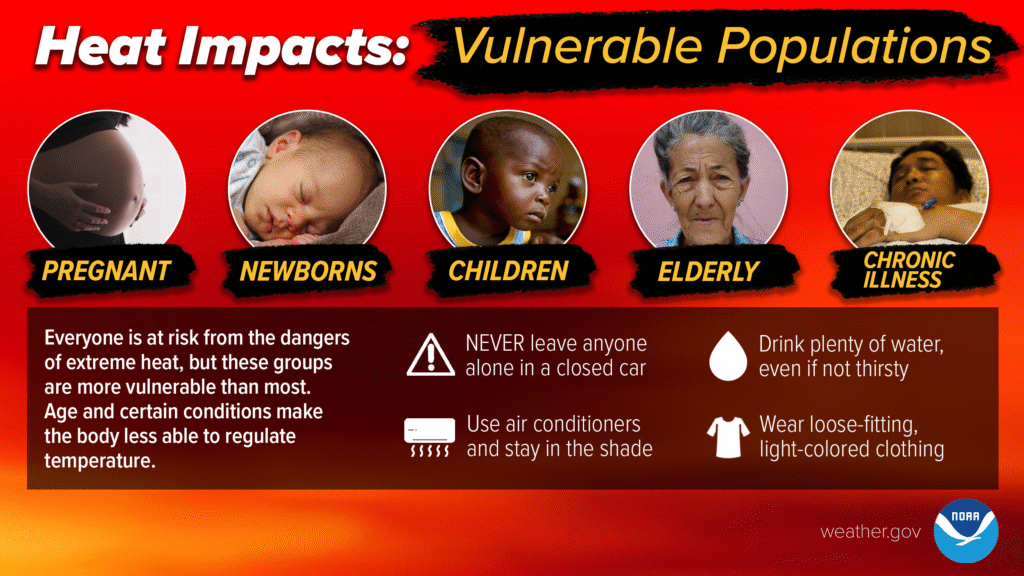
According to ” The Impacts Of Climate Change On Human Health In The United States: A Scientific Assessment” the following groups are particularly vulnerable to heat; check in with friends and relatives who fall in one of these populations, especially if they don’t have air conditioning.
- Young children and infants are particularly vulnerable to heat-related illness and death, as their bodies are less able to adapt to heat than are adults.
- Older adults, particularly those who have pre-existing diseases, take certain medications, are living alone or have limited mobility who are exposed to extreme heat, can experience multiple adverse effects.
- People with chronic medical conditions are more likely to have a serious health problem during a heat wave than healthy people.
- Pregnant women are also at higher risk. Extreme heat events have been associated with adverse birth outcomes such as low birth weight, preterm birth, and infant mortality, as well as congenital cataracts.
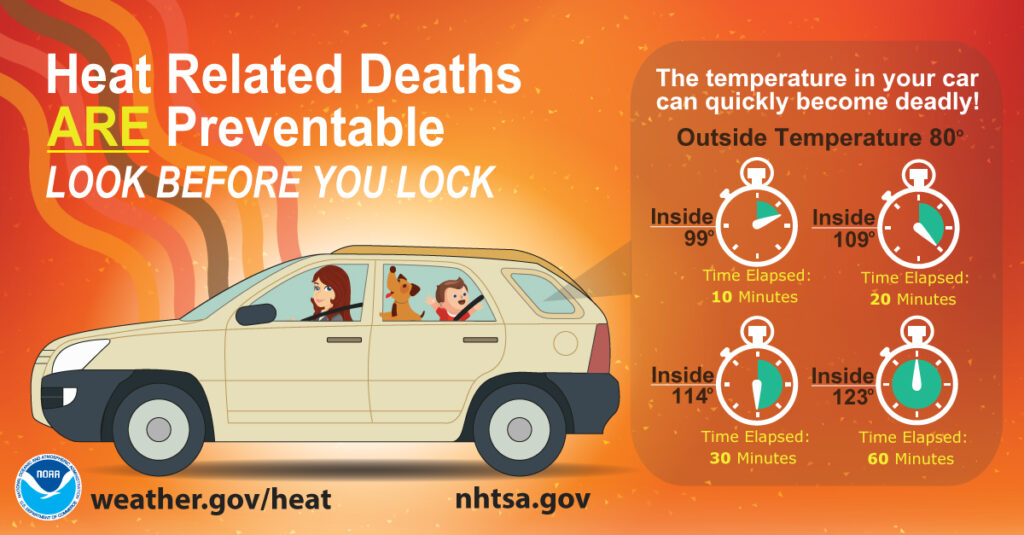
NWS Safety information on Children, Pets and Vehicles: It is “NEVER” safe to leave a child, disabled person or pet locked in a car, even in the winter. If you have a toddler in your household, lock your cars, even in your own driveway. Kids may play in cars or wander outside and get into a car and can die in 10 minutes! It was reported 31 children died in hot cars in 2025. To see the latest information, go to this link. Deaths routinely are reported as early as April and tragedies continue into December in southern states.
Since 1998, 1,051 children have died in hot cars due to Pediatric Vehicular Heatstroke (PVH). All of these deaths could have been prevented.
Find out more about how cars can heat up quickly when left in the sun. Information and resources in both English and Spanish from the National Highway Traffic Safety Administration.
Read our real-life stories from extreme heat survivors. (WLAF NEWS PUBLISHED-06/26/2026-6AM-CONTENT AND GRAPHICS COURTESY OF THE NWS MORRISTOWN)