
.jpg)
 Wlaf1450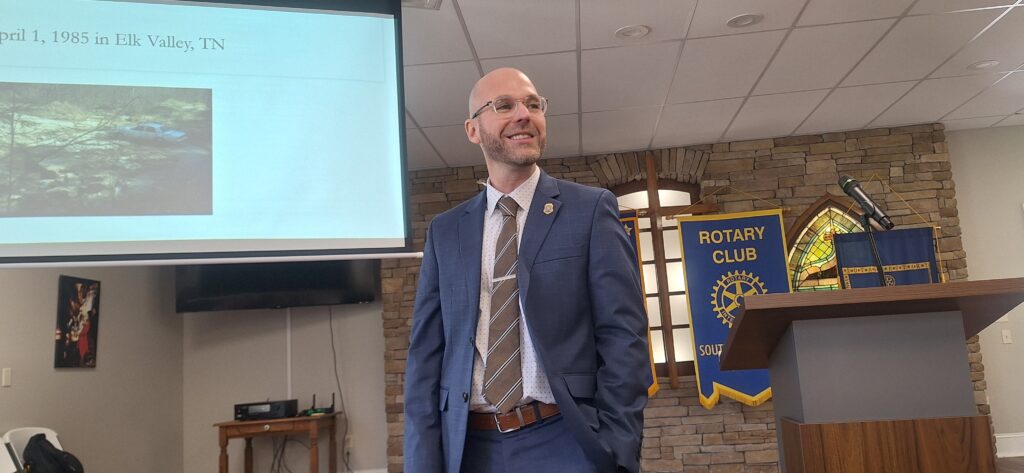
By Charlotte Underwood
LAFOLLETTE, TN (WLAF)- Special Agent Brandon Elkins with the Tennessee Bureau of Investigation spoke at Tuesday’s Campbell County Rotary Club luncheon. Elkins has had a 21-year career in law enforcement, which started here in his home area of Campbell County.
Elkins discussed homicide cold cases, specifically, how important it is to be able to identify the victim in order to investigate the crime.
“One of the toughest things about cold case homicides, is if you have an unidentified victim, it is very hard to determine how they were killed or who killed them. The adage is always true, to know the victim is to know the killer; if you can learn about the person through victimology, you can understand who they were, who they were around, what they were involved with in their life and then you can maybe figure out who the killer is,” Elkins explained.
He said some of his oldest cases are from the late 1940s. He has had one case in particular that has followed him throughout his career – that of an unidentified Jane Doe victim found in Campbell County. Through technological breakthroughs and efforts, that victim was identified back in 2022 as Tracy Sue Walker. The investigation into her death remains active, according to Elkins.
In 2007, when Elkins was a young detective with the Campbell County Sheriff’s Department, he was handed a “bare minimum” cold case file on an unidentified female victim whose remains were found in Elk Valley on April 1, 1985.
“There were no photos, no suspects, no names, just a Jane Doe victim. That is the day this case, this journey began for me in my career,” Elkins said.
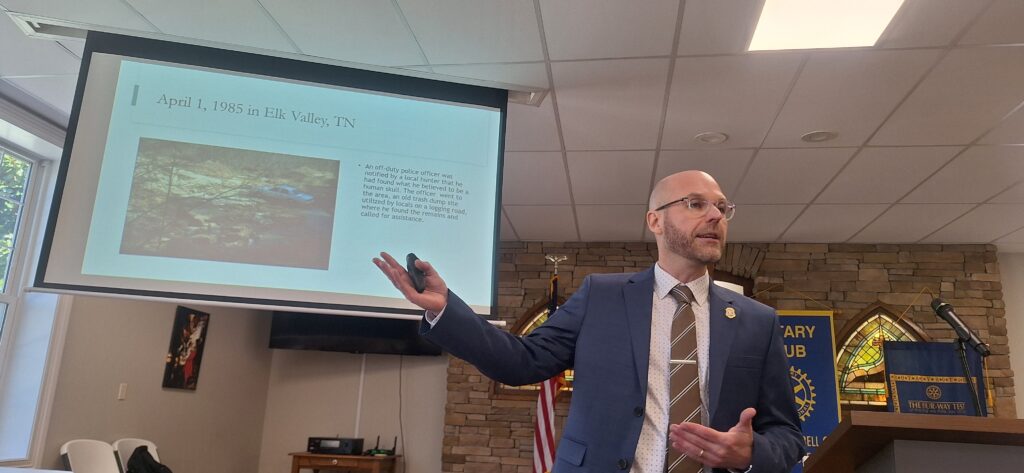
In 1985, a local off duty police officer was notified by a family member that some bones were found in a dump site that was on a logging road that ran between Elk Valley and Kentucky.
“He drives up there and sure enough he sees a human skull … in an area that was used as a dump site, it was littered with trash, sofas, tires, so it was really tough to figure all this out in the very beginning,” Elkins said. From April 1 through April 3rd, the victim’s remains were collected by Forensic Anthropologist Dr. Bill Bass from the University of Tennessee.
“Dr. Bass was able to say it was a female between ages 9 and 15 … when you think about the innocence of a young girl, it really changes the case. He determined time of death was anywhere from one year to four years,” Elkins explained.
After being handed the cold case, Elkins began “rebuilding the case file.”
In 2007, a sample of Walker’s remains were shipped to the University of North Texas Center for Human Identification and a DNA profile was developed and entered into the Combine DNA Index System (CODIS) as well as the National Missing and Unidentified Persons System (NamUS), which allows law enforcement to plug in DNA, fingerprints and more from missing persons cases.
“It is wonderful and has solved a lot of cases,” Elkins said. He took a bone from the remains found in Elk Valley and submitted that to NamUs.” However, Walker was not in the system.
Then in September of 2013, Elkins got the job opportunity of a lifetime and “hit his dream job at TBI.” He handed off the case file to another detective and left his office at the sheriff’s department.
“I remember thinking I really wish I could have figured that out before I left, but my journey wasn’t over,” Elkins said.
He was hired as the TBI agent for Campbell, Scott, and Fentress Counties in the early part of his career and one of the first files that was handed to him was the same cold case file he had been working on with the unidentified victim found in Elk Valley.
“So I then partnered with the University of Tennessee Knoxville and Senior TBI Analyst Amy Emberton who has been my right hand through all of our cold case stuff; she has been on the bureau since I was in high school, she is incredible at what she does, so Amy and I got back to work and we continued on trying to figure out who is Baby Girl, which is what we affectionately called her since 2007, that’s all we knew, she was someone’s baby,” Elkins said.
He began digging into new efforts and part of that was a partnership with the media.
“My goal was to partner with the media to try to renew interest in the public’s eyes because Elk Valley is small; people remember this, so we did that and we got a lot of calls. In fact, it was the first calls, there had never been a lead since 1985 until the news media got involved with us and partnered with us to do this and we got calls. I teach this when I teach cold case classes, when I talk to new agents, and go around the country, last year, I spoke before Congress about our efforts and I say the same thing each time, the media is one of the most important tools on a cold case investigator’s tool belt because you have to get everyone aware to it, you have to renew it and it happened,” Elkins said.
New technology brought new hope to the case for Elkins, who in 2020 got a grant from National Center for Missing and Endangered Children.
This new technology was called Forensic Genetic Genealogy (FGG). Additional victims have been identified using this technology. Elkins said he packaged the remains and shipped them to Virginia, but the remains “were so degraded that they could not get a DNA profile.”
“I was crushed, if there has been a case I have carried throughout my career, it has been this case. Of my 21-year career in law enforcement, all but two of those have had this case in it and I felt like I had let her down, let the case down and let the community down,” Elkins said.
After that, Elkins got a phone call from the CEO of a company called OTHRAM, which is a forensic genealogy lab based in Texas.
“They are the best there is, they are incredible,” Elkins said. OTHRAM wanted a shot at identifying the victim, which costs about $15,000 per case to have the forensic genealogy testing done. The CEO offered to do the testing for free, so Elkins had the other lab ship the remains to OTHRAM.
“Three months later, they called me up and said they had identified two family members that were related to the victim,” Elkins said. This was in June of 2022.
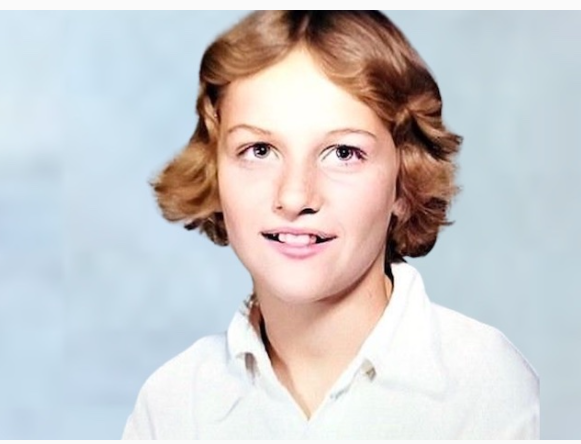
The same day as receiving those results, Elkins was able to contact the family and get the photo of Tracy Sue Walker, which was an “earth shattering” experience for him.
“For years I looked at a little girls’ skull and wondered who she was, for years, and then to get the photograph of this girl was life changing, it’s lifechanging for her family, it’s life changing for the success of this technology, but it’s also the first step forward in solving this murder… it took us almost four decades to identify her, but nobody gave up,” Elkins said.
After identifying Tracy Sue Walker, investigators were able to learn that she went missing from the Lafayette, Indiana, area in 1978 when they believe she was abducted.
The Tennessee Bureau of Investigations has approximately 479 cold cases.
Elkins said that specifically with unidentified human remains of victims, that number of cold cases fluctuates somewhere around 138 to 140 cases.
“We have seen a decrease in that though this initiative alone, we are working leads right now on 15 more, I really hope to get to zero unidentified colds cases someday, that is my goal,” Elkins said.
Elkins covered some of the many changes in technology over his 21 years in law enforcement and how that has affected and helped with investigations.
“When I started 21 years ago, DNA did not do this; It’s like horse and buggy and TESLA, these new technologies are making it truly hard to get away with murder, and we are seeing that with these old cases and with current cases. It’s getting harder and harder; we will find you,” Elkins said.
He said it was bittersweet to tell a loved one that their family was gone, but also “joyous” to give family members answers that they have waited so long on.
“I have the best job in the world, I get to help people every day, even in my hometown,” Elkins said.
He also went over ways that the community can help the TBI.
“If you know something, say something, the media is our partner; media has helped us solve as many cold cases as technology does. We put this information out and then the information that comes back often cracks these cases, so if you see a story about any of the cases we are doing or any case that any law enforcement is doing, if you know something about that call, it doesn’t matter how big or small, one little thing can break a case entirely.” Another way the public can help is through resources like Gedmatch and Family Tree DNA which are public databases that anyone can join for free and you can upload your DNA to those sites and allow law enforcement very specifically to use them to solve homicides or unidentified human remains cases.
“We are seeing an influx of people doing that across the country and it is making a big difference because the information is only as good as what’s in the system so the more people we have, the more communities we have engaged in that the more likely we are to make these identifications,” Elkins said.
In May of 2025, Tennessee Governor Bill Lee issued the reward of $10,000 for information leading to the apprehension, arrest and conviction of whoever killed Tracy Sue Walker.
If you have information about the Tracy Sue Walker case, call 1.800.TBI.FIND. (WLAF NEWS PUBLISHED-03/25/2026-6AM)