
.jpg)
 ssharp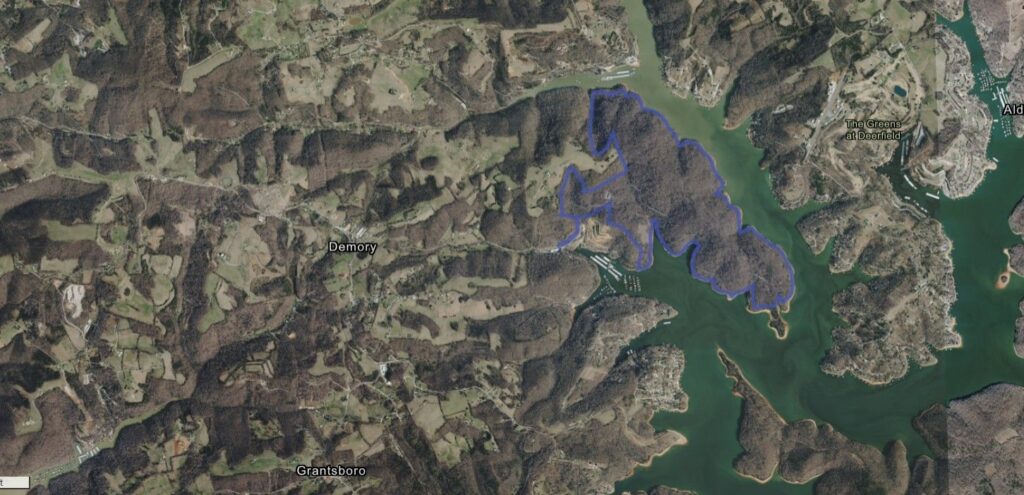
CAMPBELL COUNTY, TN. (WLAF)- Letter to the Publisher from Demory resident Robb Kerr:
Thoughtful Development vs. Unchecked Growth in Campbell County
The question before Campbell County is not whether development should occur, but rather what kind of development best serves our community. Should growth proceed at any cost, or should it be guided by logic, responsibility, and long-term benefit? The answer matters because the consequences of unchecked development are often borne not by developers, but by residents through strained infrastructure, diminished quality of life, and irreversible impacts on culture and environment.
Unchecked growth risks sacrificing the interests of citizens, the county’s traditions, and its natural resources, while disproportionately benefiting a small group of out-of-county developers and non-resident property owners. In contrast, thoughtful development is deliberate and balanced. It prioritizes residents, respects Campbell County’s character, and safeguards the environment that defines this place.
Our Greatest Asset: Year-Round Residents
Although coal mining has declined, and factories have closed, the people of Campbell County continue to work, raise families, and sustain the community. Many residents commute to surrounding counties for employment, yet they return home each day to the county where they pay taxes, participate in civic life, and preserve local traditions.
These year-round residents are Campbell County’s greatest asset. Development should strengthen their quality of life, not undermine it. Any proposal that fails to place their needs first deserves careful scrutiny.
The Strain of Seasonal Lake Development
Seasonal lake tourism does contribute to revenue, but it also imposes significant and ongoing costs. Roads, utilities, emergency services, and public infrastructure must be expanded and maintained to handle temporary population surges. Increased tourism brings traffic congestion, overcrowded waterways, and environmental pressure.
Adding hundreds of additional seasonal homes along the lake would intensify these challenges. Road widening, utility expansion, and long-term maintenance would become unavoidable, and those costs would ultimately fall on the county and its residents.
Who Truly Benefits from the Proposed Development?
The proposed 600-home development, marketed as Elk Stone at Lake Norris, is reportedly expected to feature homes priced at $700,000 or more. In contrast, the average home value in Campbell County is $233,000. This raises an essential question: who is this development for?
Such pricing places these homes well beyond the reach of most Campbell County residents. The likely buyers are out-of-state or out-of-county purchasers, financed through non-local banks. While a one-time $5,000 impact fee per home has been mentioned, this fee is non-recurring and would be collected gradually over many years as the project is built in phases, not all at once.
The developer, Crafted Milestone LLC, is not a local company. Large developers typically rely on the same contractors across multiple projects, meaning local employment benefits would likely be limited, inconsistent, and short-term. Phased construction further reduces any sustained economic benefit to local workers.
By contrast, what would truly benefit Campbell County is the development of affordable housing for year-round residents. Those who live here, raise families here, contribute to the local economy year-round, and care deeply about the county’s traditions and culture. Suitable land already exists along well-established corridors such as Demory Road and the newly widened four-lane route up the valley, where infrastructure is already in place and costly upgrades would be minimal.
If the county’s priority is genuinely to benefit its citizens, it is worth asking why these types of developments are not being pursued, while high-cost projects aimed at seasonal visitors continue to take precedence.
Property Tax Revenue Requires Context
Supporters of the project often cite property tax revenue as justification. Deerfield Resort, for example, accounts for approximately 10.12% of the county’s property tax revenue with 890 homes. However, context is critical.
Homes in Deerfield typically range from $500,000 to $1.4 million, with an estimated average value of $950,000. Well above the countywide average home value of $233,000. Naturally, Deerfield generates higher-than-average tax revenue.
It is also important to recognize that Deerfield is a well-planned, well-developed, and well-maintained community that has matured over time. While it is certainly an asset to the county, its success does not guarantee that every large-scale development will yield comparable benefits or outcomes.
Infrastructure Challenges on Shanghai Road
The proposed development is not located at the end of Demory Road, but at the end of Shanghai Road—a narrow, winding 1.9-mile roadway just over 16 feet wide, with multiple dangerous blind curves. Residents already contend with heavy seasonal traffic, including boats, delivery trucks, construction vehicles, and lake visitors, all funneling through the tight intersection at Demory Mart and Demory Road.
A 600-home development would dramatically increase traffic volume and safety risks. Approval of this project would necessitate widening Shanghai Road along its entire length and would be a major undertaking. The downhill side of the road drops steeply and would require guardrails, meaning expansion would have to occur on the uphill side. This would require taking land from almost every resident along the road.
It has been stated that paving alone costs approximately $100,000 per mile. Simply paving Shanghai Road and the development would easily exceed $300,000, and that figure does not include earthmoving, grading, drainage, guardrails, or other necessary upgrades.
Private infrastructure would also be severely impacted. The water line runs along the upper side of Shanghai Road and would need to be removed and replaced along its entire length. Most utility poles are located on that same side, requiring relocation. These changes would involve extensive earthmoving, prolonged construction, and millions of dollars in county expenses.
During this period, residents would face serious disruptions: potential loss of water service, power outages, restricted driveway access, and prolonged safety hazards. These disruptions represent a significant erosion of residents’ quality of life.
Protecting Sacred Ground and the Environment
Beyond infrastructure costs and disruptions, there are profound concerns related to cultural and environmental preservation. On the property proposed for development lies a cemetery containing ancestral graves of many local and county residents. These are unmarked graves that were not removed when TVA constructed Norris Dam and flooded the area.
If development proceeds, what guarantees exist that these graves, marked and unmarked, will be treated with dignity and respect? What assurances are there that accidental disturbances during construction would result in proper removal and reinterment? How will the existing cemetery be protected and maintained?
Additionally, the peninsula includes a protected nature preserve at its end. What enforceable guarantees ensure that this preserve will remain undisturbed? A development of this scale would require numerous septic systems and leach lines. Without clear safeguards, there is a legitimate risk of contamination affecting the cemetery grounds, the nature preserve, and Norris Lake itself.
Large developments also increase stormwater runoff. While regulations typically require retention or detention ponds, compliance alone does not eliminate risk. Protecting sacred ground, waterways, and environmentally sensitive areas must be a central consideration—not an afterthought.
Conclusion
Development should enhance Campbell County, not overwhelm it. It should prioritize those who live here year-round, respect local traditions and culture, and avoid imposing unreasonable financial, infrastructural, and environmental burdens on residents.
This is not a question of being “for” or “against” development. It is a question of responsibility, balance, and long-term impact. Logical, conscientious development must come before growth for growth’s sake. Because once these decisions are made, their consequences cannot be undone.
(WLAF NEWS PUBLISHED 12/23/2025-6AM)
Stop this at all costs!!